Controlled Articular Rotations
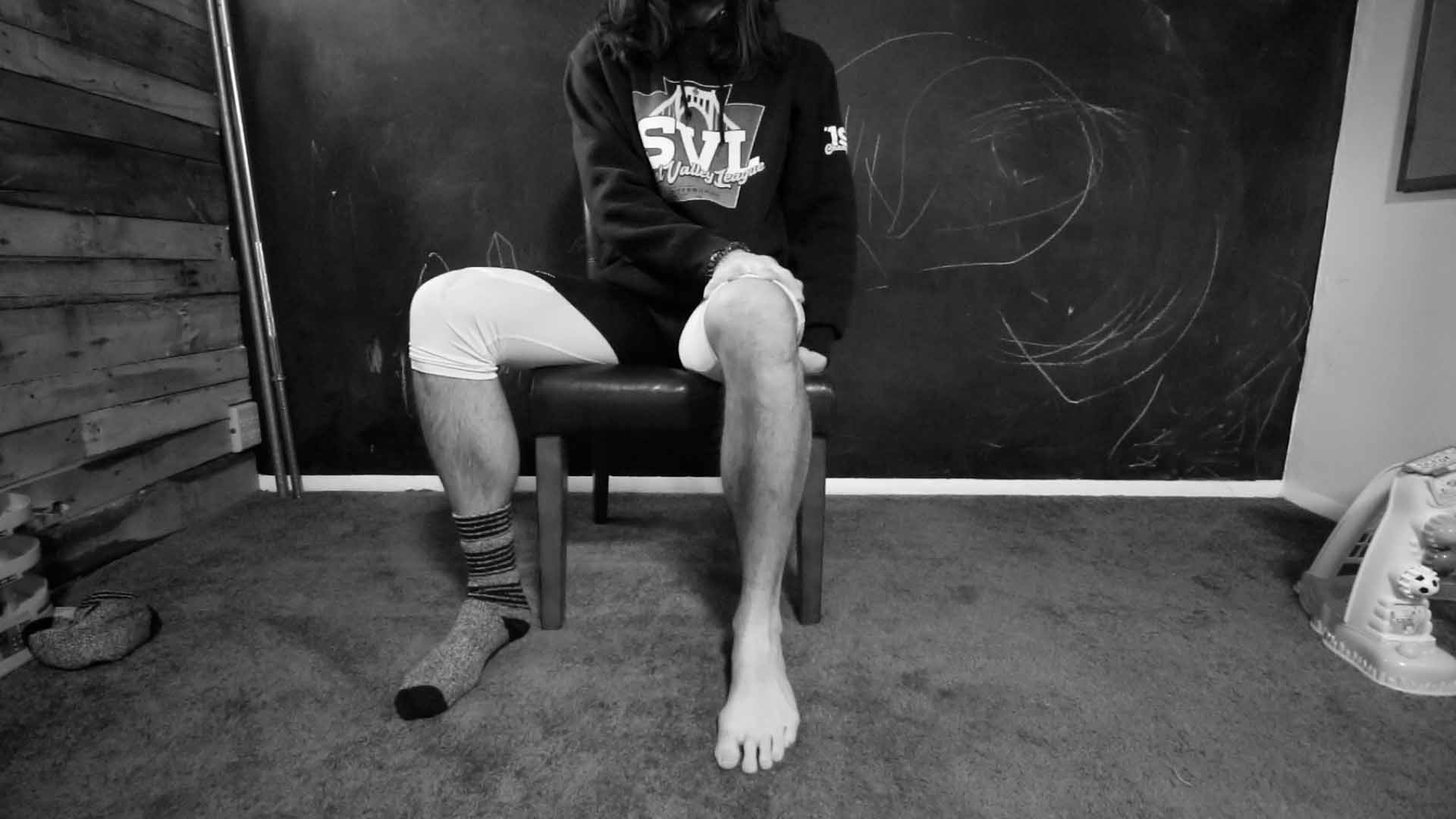
Neutral starting point: kneecap tracking directly over the toes.
Countering compensations: don’t confuse movement at the ankle for movement at the knee, avoid rotation at the hip.
Basic functions:
- Flexion: lift foot to butt.
- Extension: kick a ball.
- Tibial rotation: twisting of the shin.
Flexion
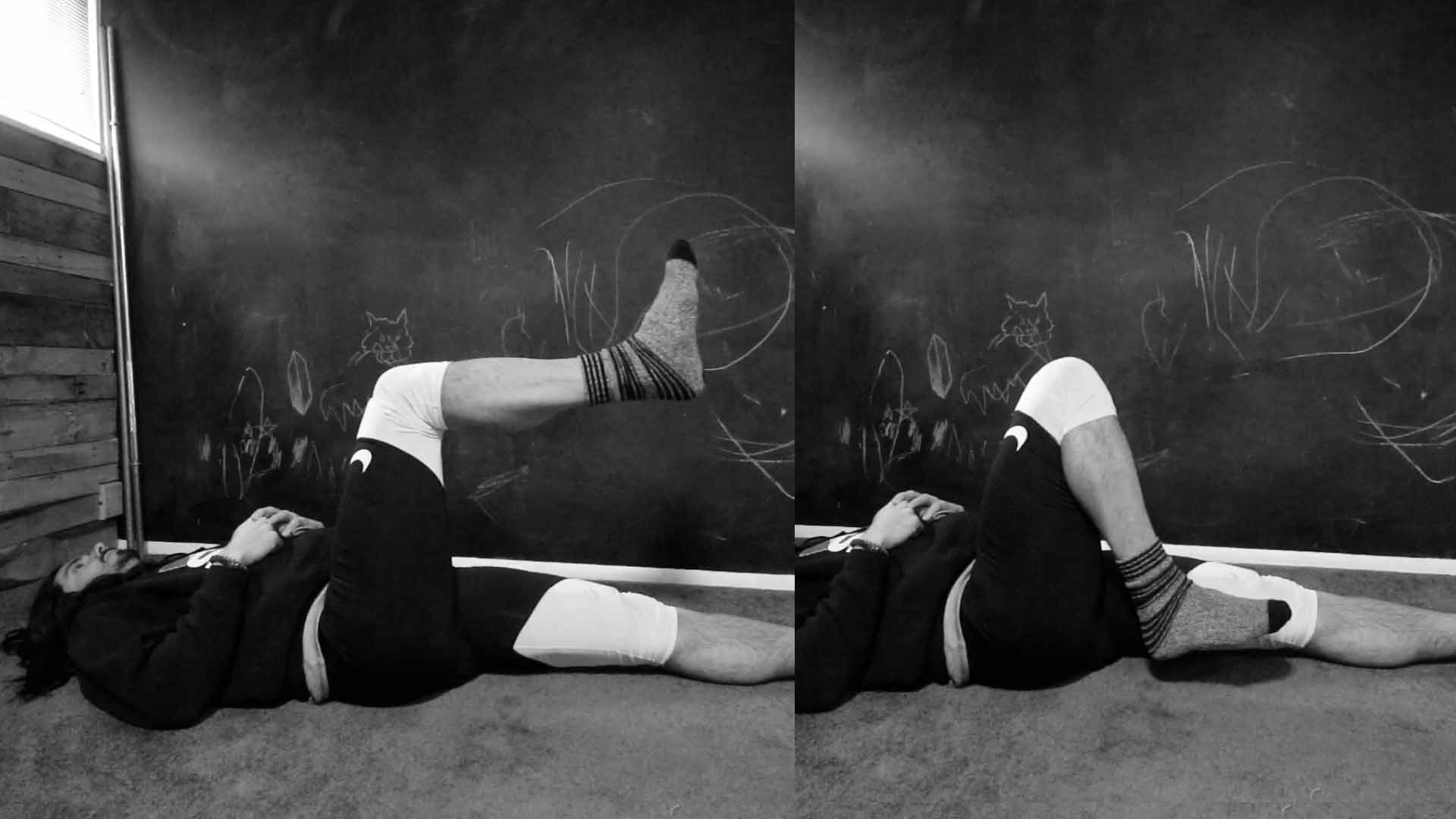
Flexion is when the angle on the backside of your body between the lower leg and upper leg closes. Think of kicking your butt with your foot.
Notes:
Don’t flex the hip.
Extension
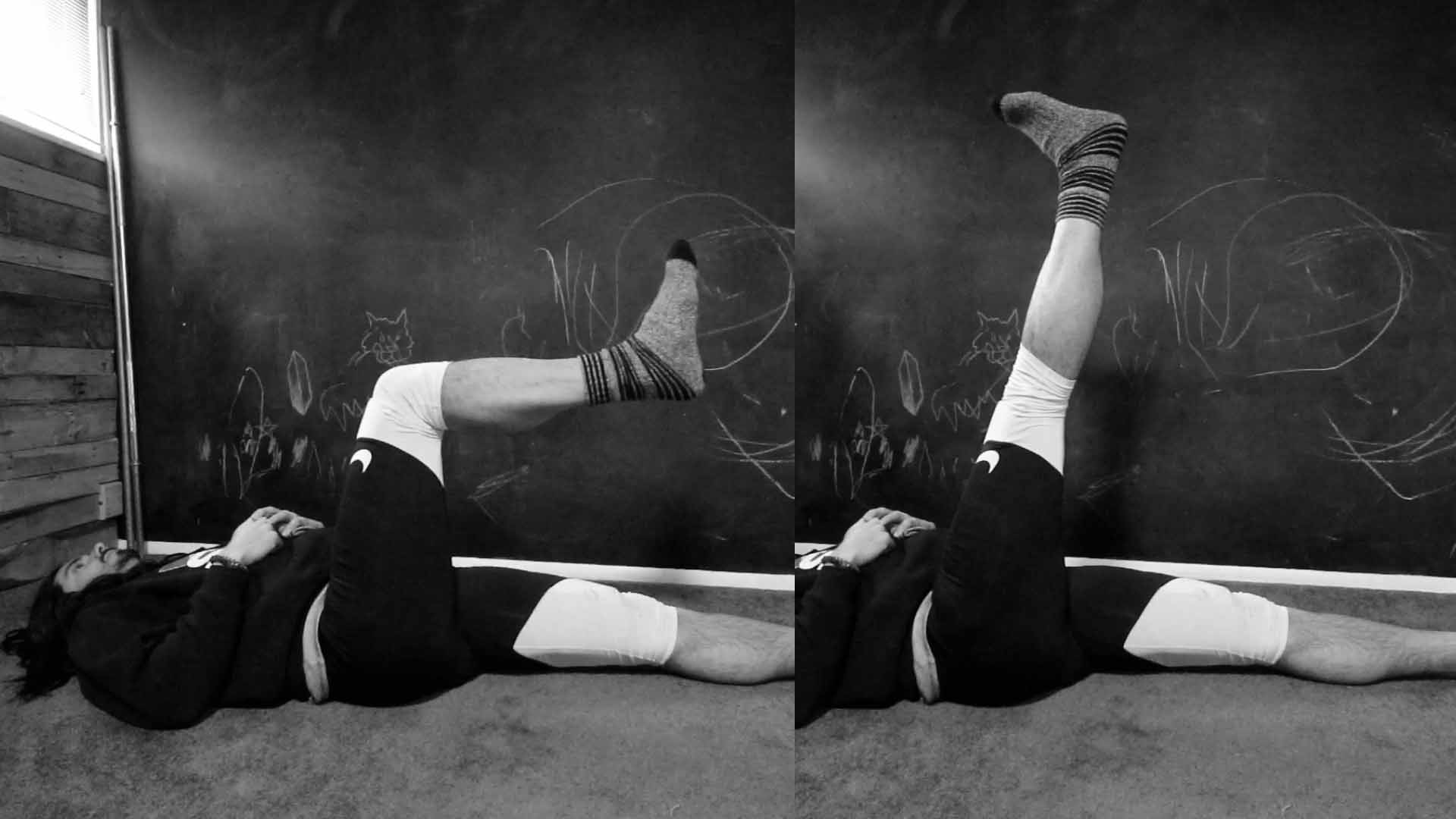
Extension is when the angle on the backside of your body between the lower leg and upper leg opens. Think of kicking a ball with your foot.
Notes:
Don’t lose hip flexion.
Tibial rotation
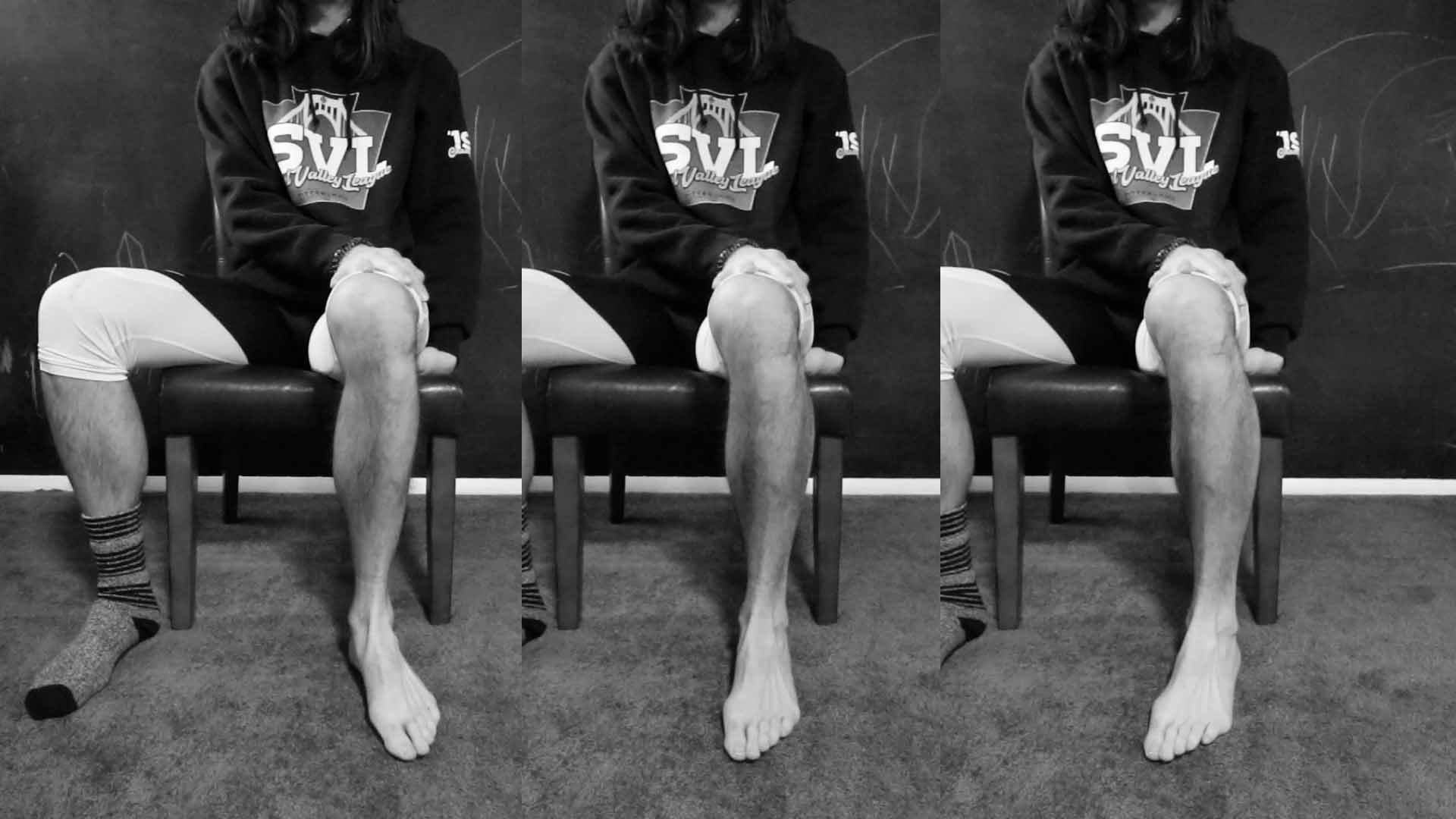
Tibial rotation is when the lower leg rotates independently of the upper leg. Tibial rotation can usually be spotted by looking at the kneecap relative to where your patellar tendon inserts on your shin (the small bump).
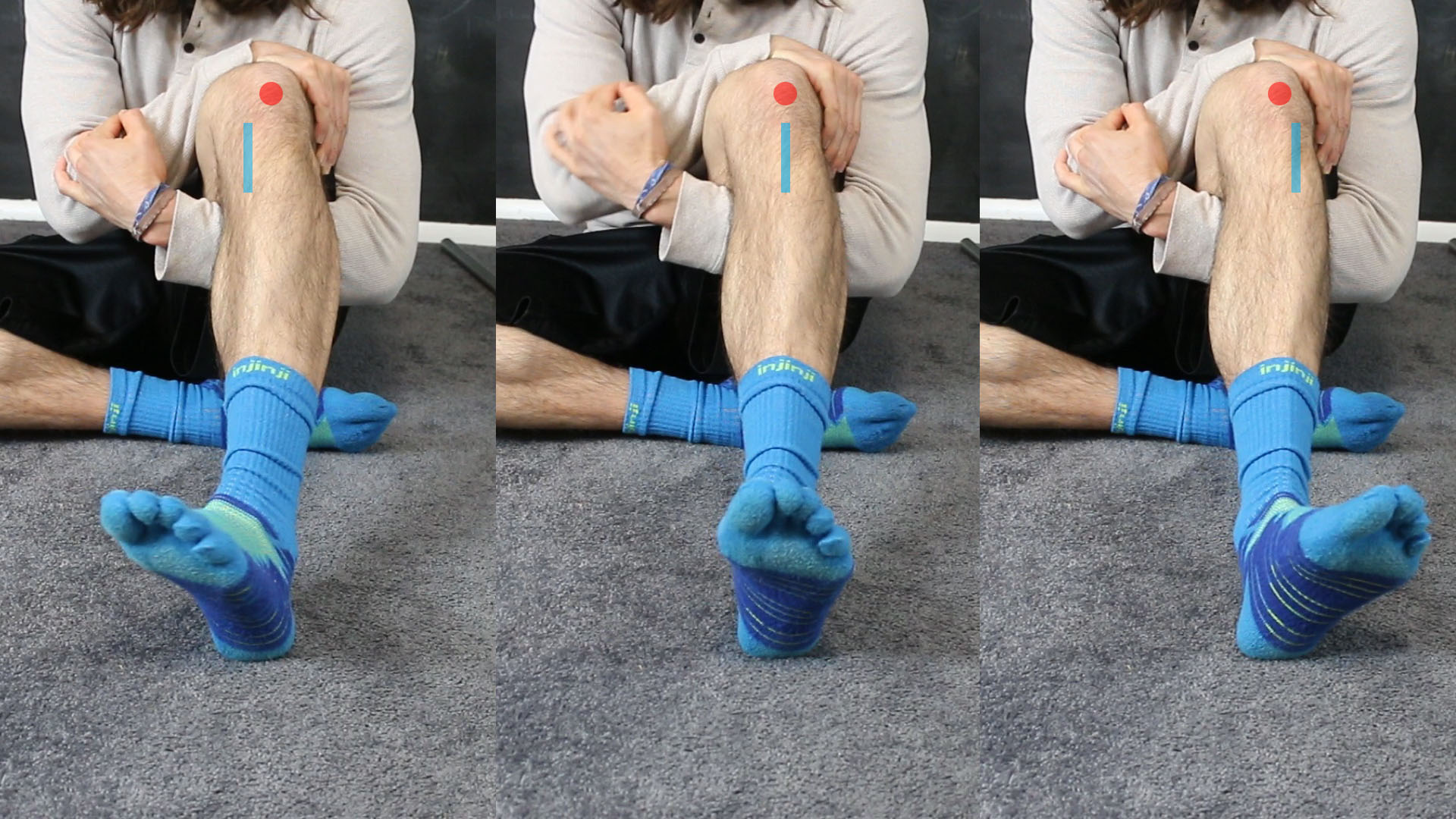
External tibial rotation is when the lower leg rotates away from the midline. Internal tibial rotation is when the lower leg rotates toward the midline.
Notes:
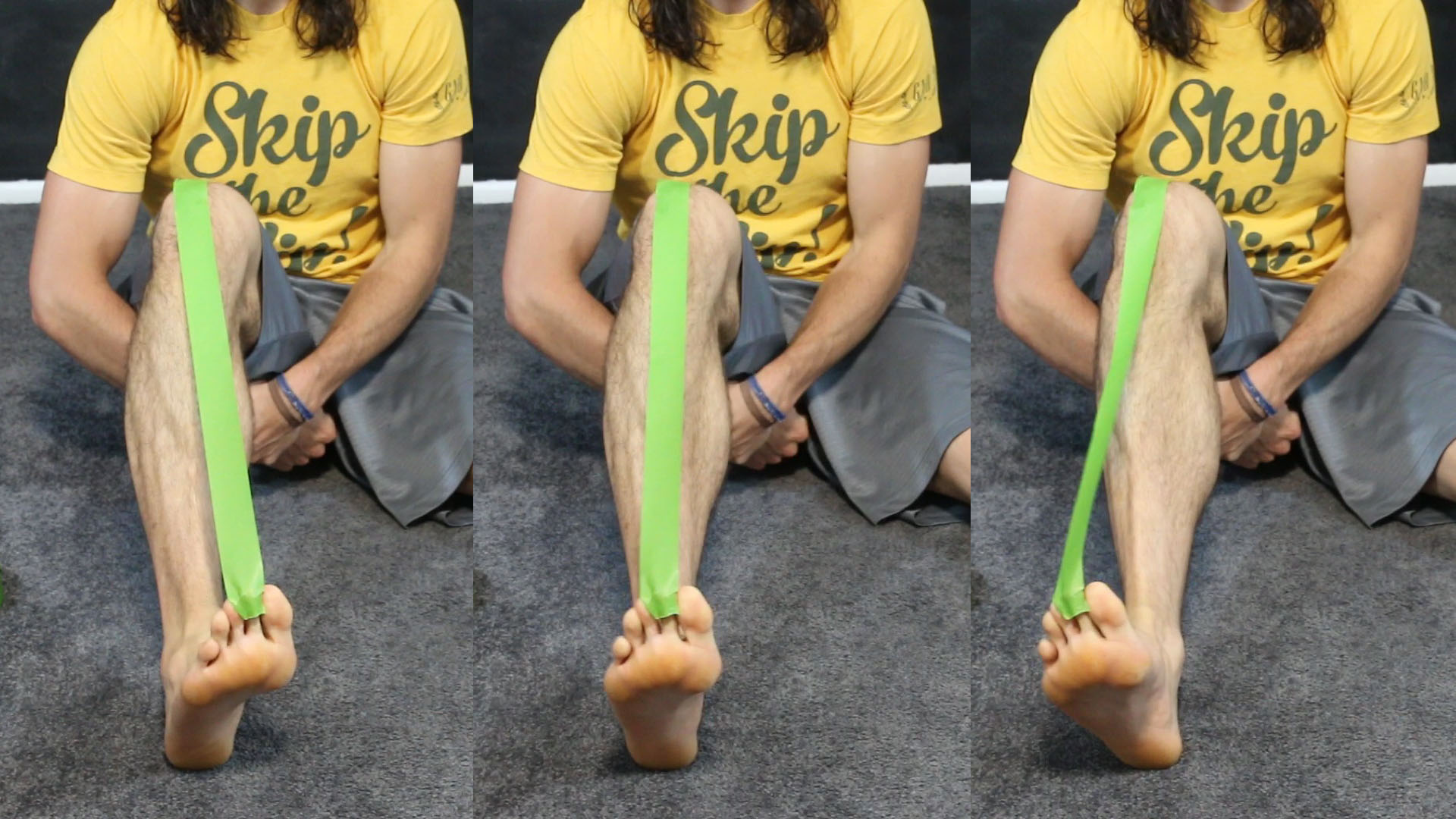
Watch for ankle rotation. You can tell what’s rotating by running a piece of tape from your knee to your toes. If the piece of tape comes loose, chances are you’re rotating through your ankle.
3-D ROTATION
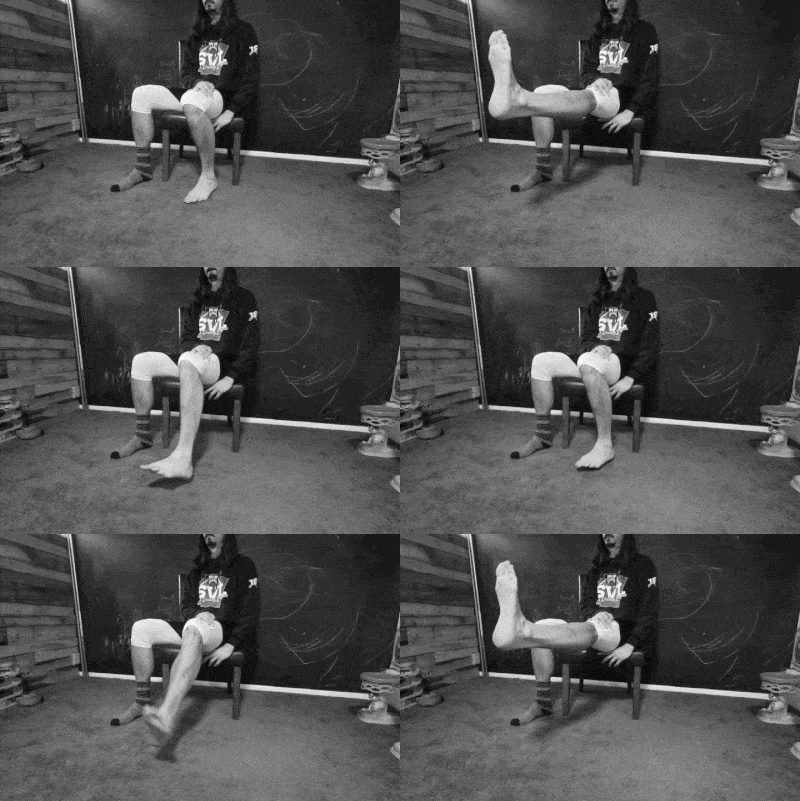 The 3-D rotation is a combination of flexion, extension, and tibial rotation. I like doing these knee rotations from two different positions. The first is a quadriceps dominant position.
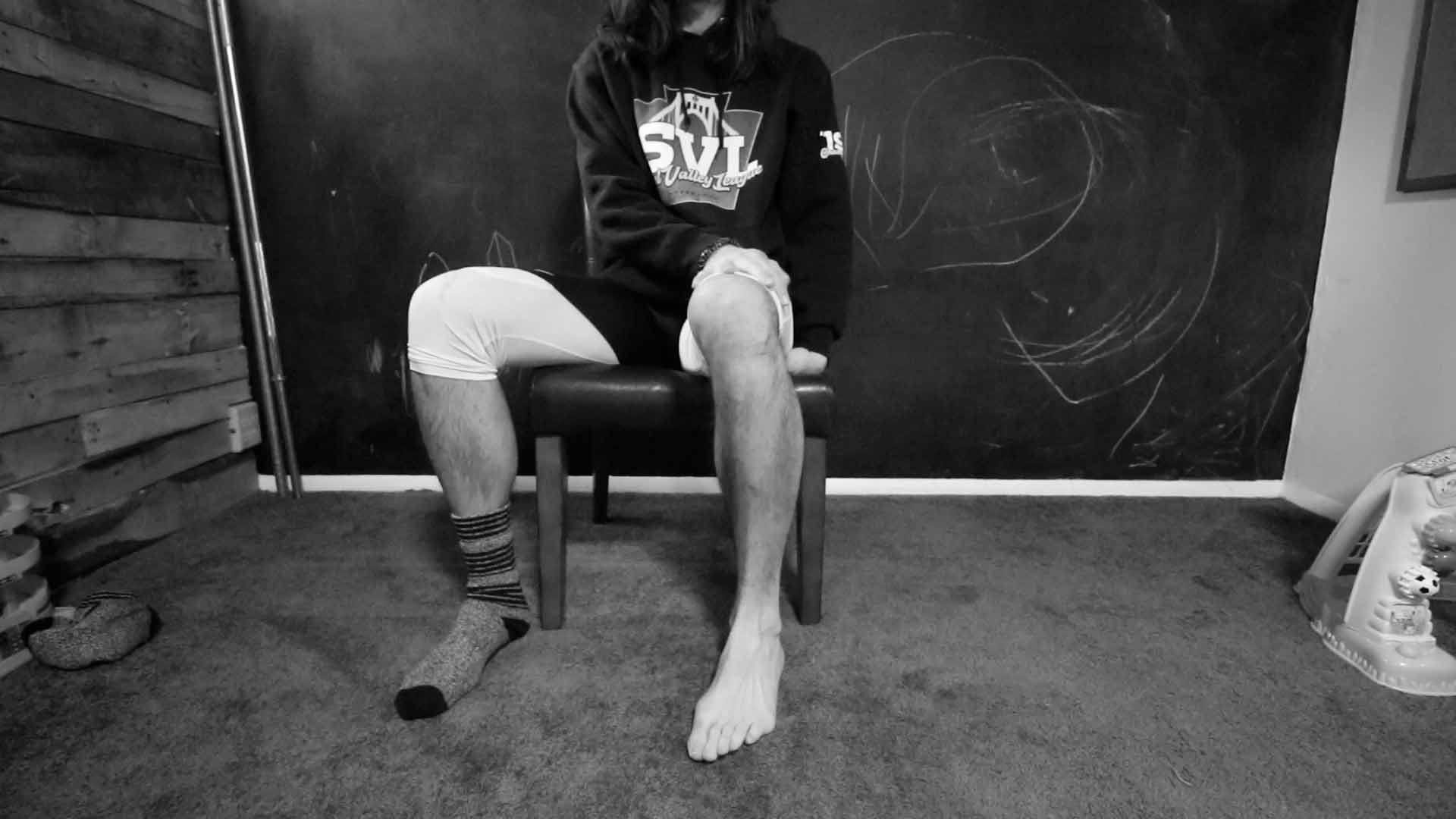
First, sit on a chair. Put a hand above and below your upper leg, near your knee. This will help you get a better feel for what’s happening at the knee.
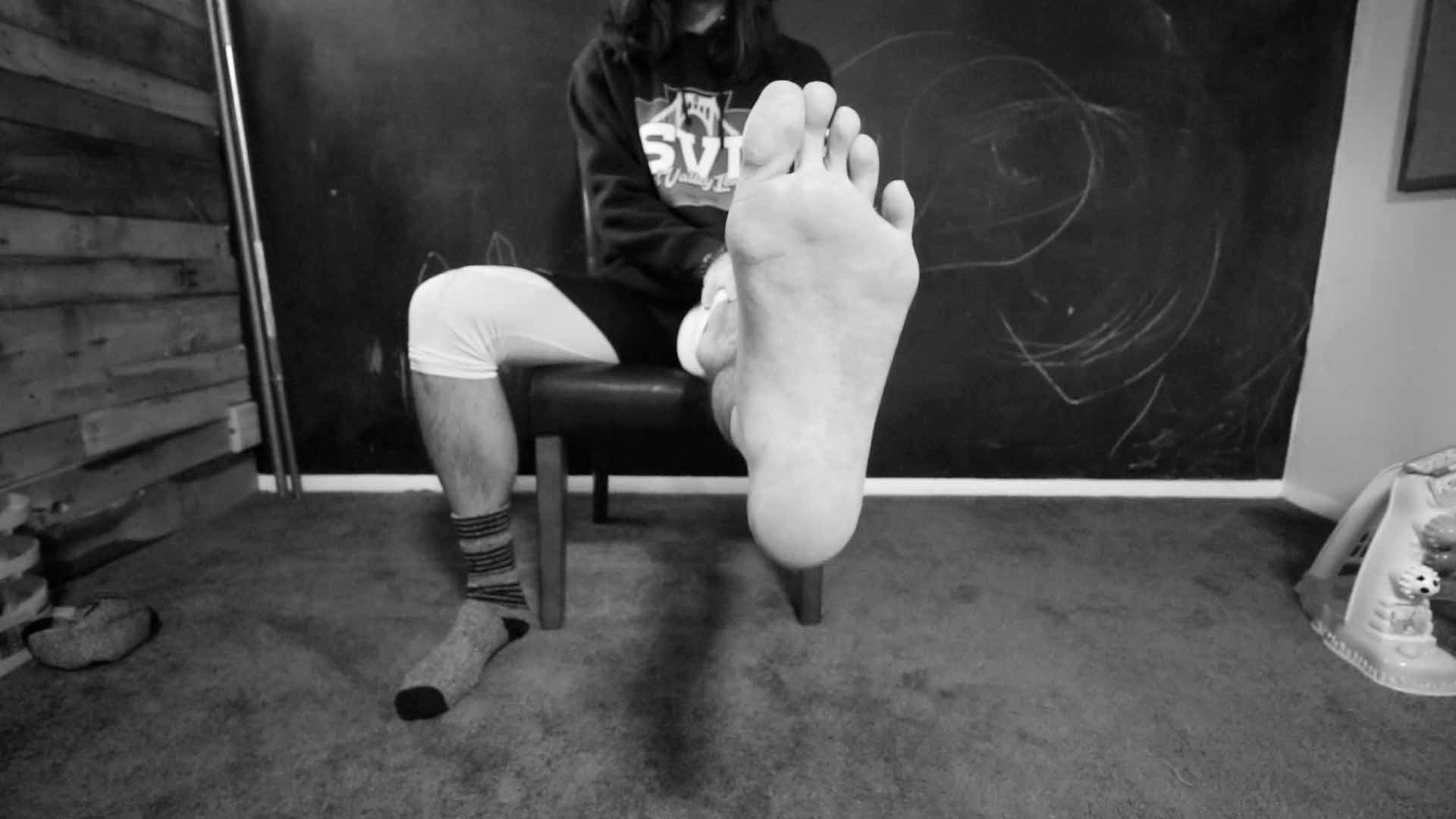
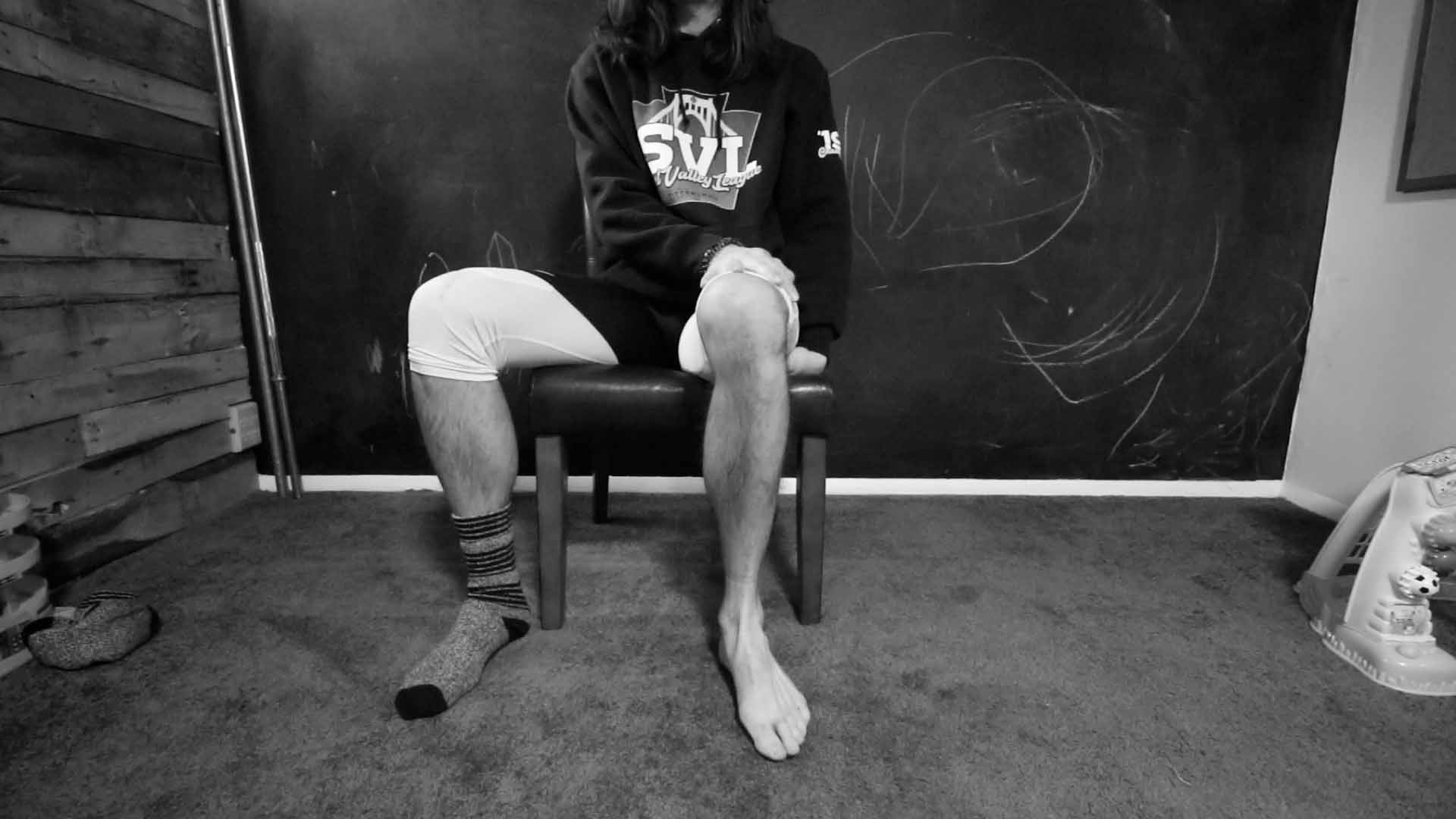
Start with extension, act like you’re kicking a ball. Make sure you can fully extend your knee. If your hamstrings are tight, you might need to adjust your body position to allow you to reach full extension.
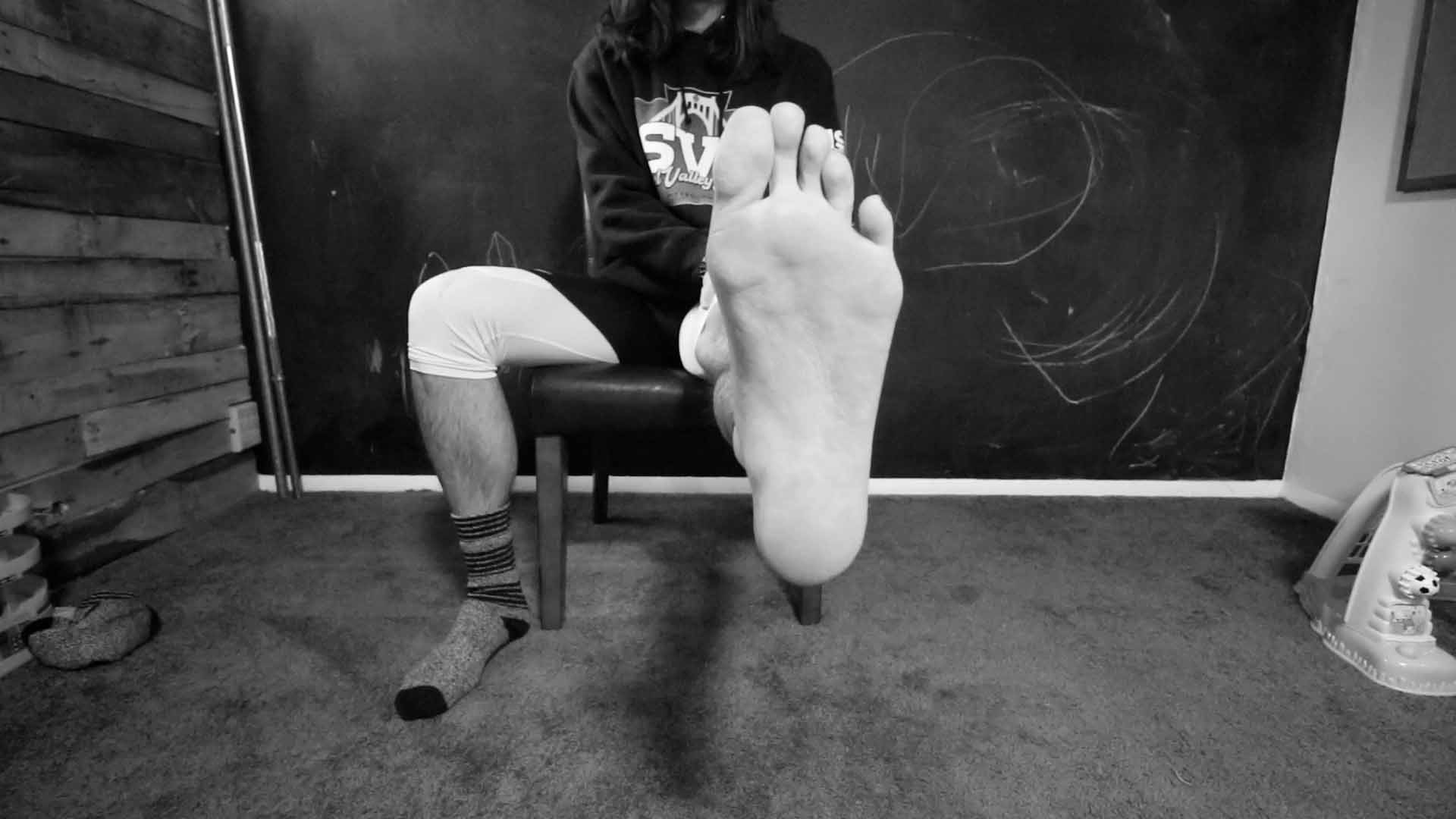
Once you’re fully extended, internally rotate your tibia. Pending your mobility, this may be a small range of motion.
Once you’re internally rotated, move into flexion and bring your foot to your butt. Keep your tibia internally rotated, actively trying to keep maximal rotation the entire way.
Once you’re fully flexed, switch over to external tibial rotation.
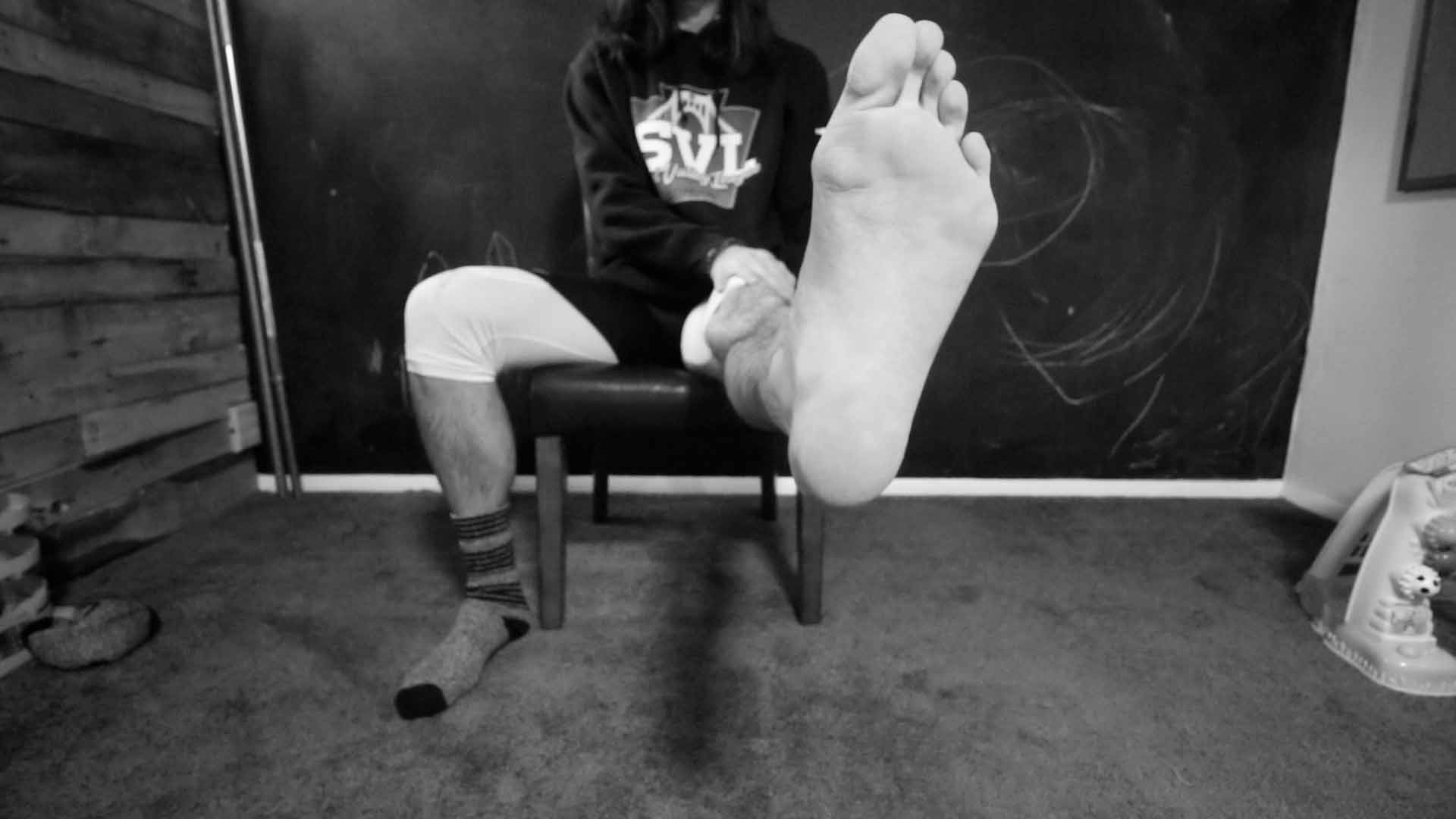
Once you’re externally rotated, extend your knee. Actively try to keep maximal rotation the entire way.
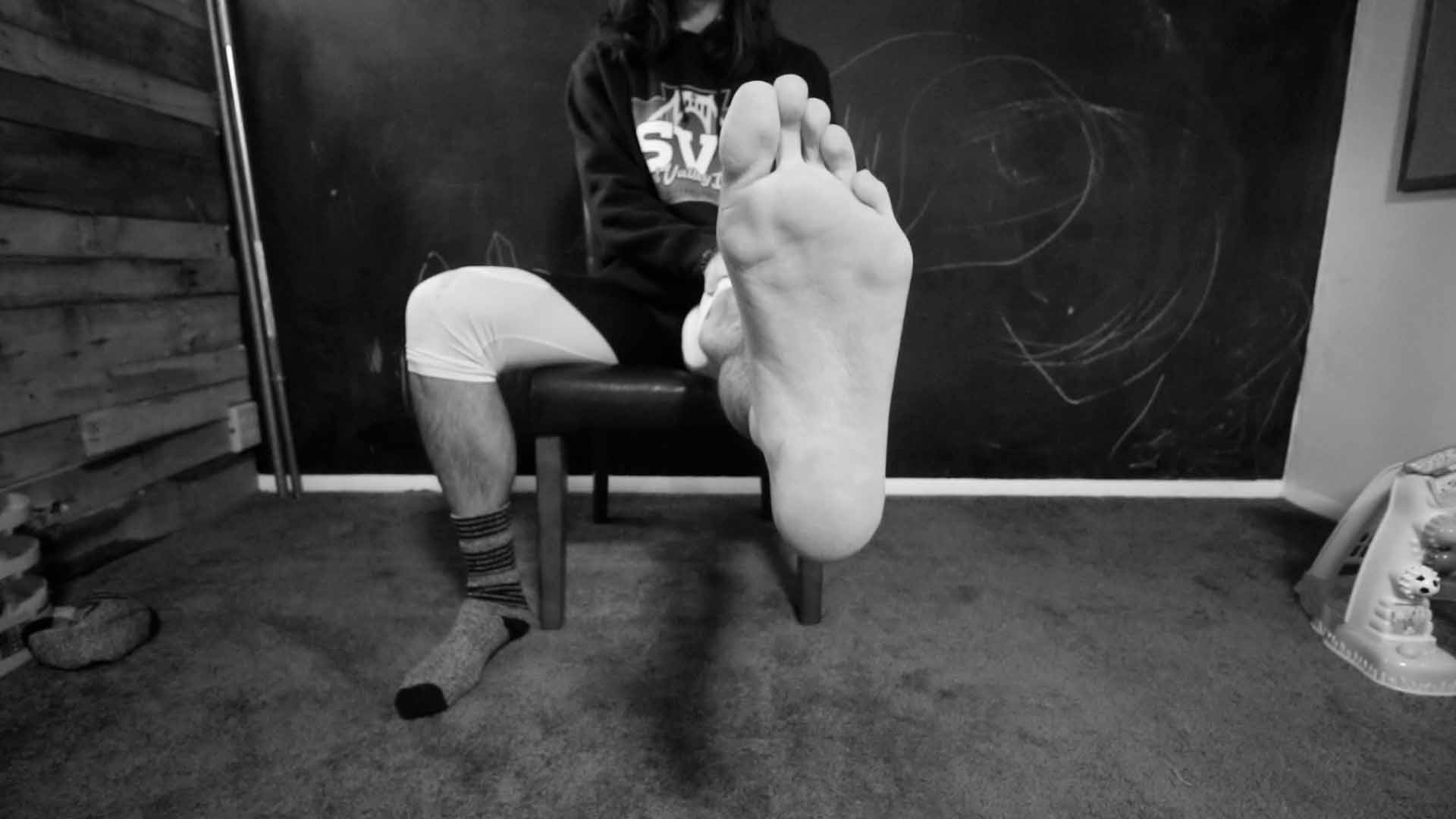
Once you’re extended, undo the internal rotation and return to the original starting position. This is ½ rep. To complete a full rep, reverse the sequence:
- extension
- extension + internal tibial rotation
- internal tibial rotation + flexion
- flexion + external tibial rotation
- external tibial rotation + extension
- extension
Notes:
Take note of what movements feel tighter than others and when you’re prone to compensate. From a compensation standpoint, you’re looking at ankle rotation instead of tibial rotation. The only movement that should occur at the foot should be a consequence of tibial rotation.
You should attack troublesome areas with isolated 2-D mobilizations.
You can do these mobilizations in a different order. Instead of starting with extension, start with a different movement and circle throughout the remaining ones.
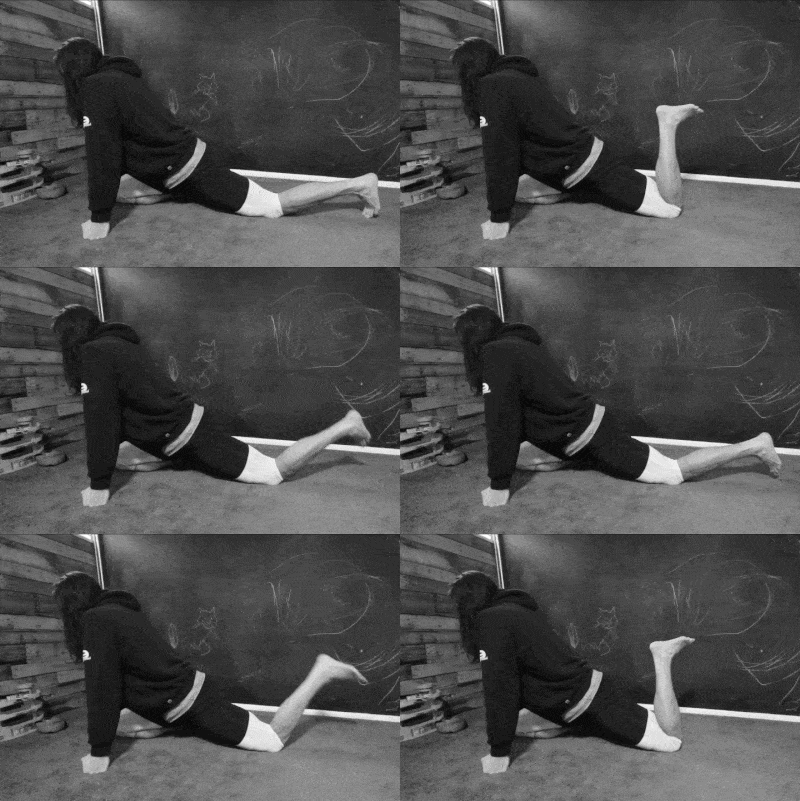
I also recommend doing this rotation with a hamstring emphasis. The way shown above targets the quads. You can also target the hamstrings by assuming a pigeon pose and following the same sequence.
→ Neck
→ Shoulder-Blades
→ Shoulders (coming soon)
→ Elbow (coming soon)
→ Wrist (coming soon)
→ Thoracic Spine
→ Lumbar Spine
→ Hips
→ Knees
→ Ankles