Body Comp Basics
this is Part 1 of Body Comp Basics, an attempt to explain the mysteries of body composition and uncover the first principles of fat loss and muscle growth.
PRE
your body composition is influenced by energy balance, which is the relationship between energy demand (the amount of energy your body needs), energy supply (the amount of energy you feed your body), and energy reserves (the amount of energetic material you have stored inside of you).
this throuple has a rather straightforward relationship:
- supply > demand = ↑ reserves
- demand > supply = ↓ reserves
don’t confuse “straightforward” with “single-dimensional.” when looking at energy balance, you see a snapshot in time. the information you can extract is useful but limited. hidden beneath the superficial summation is a complex 3-D world you’ll miss unless you squint your eyes and look beyond what you initially see.
ENERGY DEMAND
Otherwise known as: the metabolic cost of your miserable existence
everything you do requires energy. deliberate exercise like jogging and lifting weights requires energy. non-deliberate physiological processes also require energy: heart beating, brain thinking, pancreas squirting bile into your stomach to help you digest the chocolate-covered bacon you pretended to enjoy because it was $7) require energy.
contrary to popular belief, most of your body’s energy demands stem from non-deliberate physiological processes: stuff your body would do even if you were in a coma. your diaphragm (muscle above your belly) is expanding and contracting every second of every day to help you breathe.
exercise isn’t real.
you’re always exercising.
even if you’re sedentary, you’re like an idling car. you’re “on” and using energy to stay “on” even though you don’t move much. doing deliberate exercise increases the amount of energy your body would otherwise use (but not as much as treadmills and WHOOP watches suggest).
the amount of energy your body would use on any given day if you were comatose, for bare-minimum essential physiological functions, is known as basal metabolic rate (BMR). you’re not comatose (i hope). even if you’re sedentary, you’re somewhat active. you bend over to tie your shoes.
the amount of energy your body uses on any given day is higher than your BMR.
you can estimate how much energy your non-comatose self actually uses on any given day, something known as total daily energy expenditure (TDEE), with this equation:
BODY’S WEIGHT (IN POUNDS) x 13-15 =
AVERAGE TDEE (IN CALORIES)
and so, if you weigh 180 pounds, you can assume your body uses an amount of energy equivalent to 2340-2700 calories every day. this is an average. your body doesn’t use the same amount of energy every day. this is also an estimate. individual metabolic rates vary for reasons beyond weight.
by the way, calories are not “fattening” or “sugar” or negative in any way.
calories are simply a unit of measurement for heat energy, much like degrees are a unit of measurement for temperature. there are no good or bad calories, just as there are no good or bad degrees (although i’m sure many liberal arts majors would disagree).
if you’re not American, you might measure a food’s energetic properties in joules. unfortunately, i’m American and i assume the world revolves around me, so i’m going to ignore joules and hit you with this useless information instead:
the “calories” you’re [probably] familiar with are big-c Calories. big-c Calories are “kilocalories,” which equals 1000 small-c calories. this distinction is rarely made. when chatting about calories, it’s safe to assume everyone is talking about Calories, which is to say “kilocalories,” even if the c is lowercase.
your trivia team can thank me later.
there are fancy TDEE calculators that take into consideration your body fat percentage, your activity levels, and how often you sneeze.
although many things do influence your TDEE, accounting for every conceivable variable often backfires. for instance, you probably don’t have an accurate estimate of your body-fat percentage because you’re using a cheap at-home step-on scale that bases its measurement on the rate at which an electrical current travels through your body and this is super sensitive to non-fat factors such as hydration, just like you probably don’t have an accurate estimation of how active you are because you’re human and you lie to protect your ego (TRUST ME BRO, I LIFT WEIGHTS VIGOROUSLY, NOT MODERATELY), just like you probably don’t…
after accounting for errors within the extra variables of consideration, you end up with a sky-high estimate of your TDEE. not good.
the only way to get an accurate estimate of your TDEE is to convince a scientific establishment to lock you inside a vacuum-sealed room capable of measuring the amount of heat that radiates from your body. you don’t have access to one of these rooms. just multiply your weight (in pounds) by fourteen. don’t get fancy… unless you’re an eighteen-year-old high-school three-sport athlete, in which case you might be better off multiplying your weight by fifteen. or, on the opposite end, if you’re a seventy-year-old retired writer without a physical past, then maybe you should multiply your weight by thirteen.
ENERGY SUPPLY
Otherwise known as: the salary you shove into your esophagus every day
there are a finite amount of red firecrackers floating inside of you. when your body needs energy (which is always), it ignites a firecracker. when the firecracker explodes, energy is released and used in spectacular fashion to fuel every microscopic move you make, of which farting is included.

as with a Wolf Pack, once one of your internal firecrackers explode, it’s useless. quite concerning since your body has limited quantities of them and you need energy available every split second of every split second.
fortunately, by the power of the gods, both old and new, your body is able to repair its internal firecrackers with the food you eat. your intestines strangle every last crumb you consume into microscopic miso and use some of the resultant biochemical soup to repair its firecrackers so they can explode once again.
with a little detective work, you can estimate how much energetic material you consume on any given day.
long ago, some pyromaniacs lit food on fire. they discovered three different substances that gave off a standardized amount of heat when burned. this amount of heat was (and still is) assumed to equal the amount of energetic material contained within the substance (even though it’s not).
these three substances are known as macronutrients and they are fats, proteins, and carbohydrates. their standardized heat yield upon incineration:
fats: 9 calories per gram
proteins: 4 calories per gram
carbohydrates: 4 calories per gram
this is one of many discoveries that gave rise to nutrition facts labels, which can be found on most packaged foods. nutrition fact labels tell you how many calories are in one serving of the food in question (among other things) based on how many grams of each macronutrient it contains. this is assumed to equal the amount of energy your body has available after digestion and absorption (even though it’s not). and so, if you track how many servings you eat, you can estimate how much energetic material you’re tossing into your intestines.
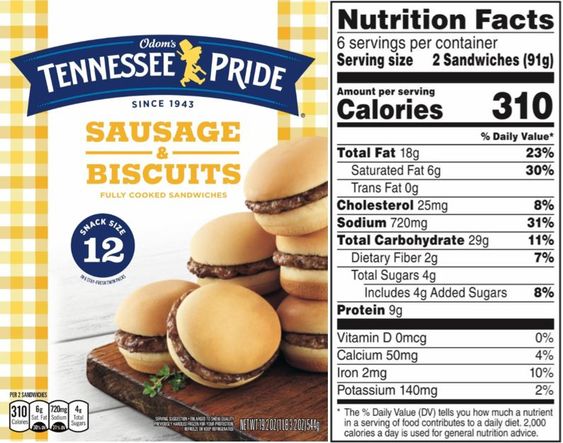
if there’s no nutrition facts label on the package, you can usually find a food’s nutrition facts on the internet. the salmon i bought yesterday is wrapped in white butcher paper. says there are 0.8 pounds of salmon inside, but there are no nutrition facts. after lobbing “salmon nutrition facts” at Google, i see three ounces of salmon contains roughly 177 calories. there are 12.8 ounces in 0.8 pounds, so the hunk of salmon i have contains roughly 700 calories.
ENERGY RESERVES
Otherwise known as: the amount of energy hidden within all your flaps and folds
occasionally, my pessimistic brain inserts itself into my consciousness (like Jack Nicholson’s “Here’s Johnny!” scene in The Shining) and reminds me that, at any moment, Earth can murder us. if oxygen pulled a Houdini and vanished from the air for five consecutive minutes tomorrow, most humans (myself included) would die.
fortunately, we can survive longer than five minutes without eating food despite needing energy 24/7 because we have the ability to store energetic material. similar to how a car has the ability to store fuel: cars don’t have to be connected to an electrical outlet in order to function (like vacuum cleaners). cars store energetic material inside their shells. so do you. the energetic material in the food you eat is stored inside of you until needed.
your body stores energetic material in a few different places with three notables being: liver, muscle, and adipose (fat).
liver and muscle store sugar in the form of glycogen. sugar comes primarily from the breakdown of carbohydrates, but your body can also transform proteins into sugar when necessary. adipose stores fat in the form of triglycerides. triglycerides are derived from fats, but your body can also transform carbs into triglycerides when the storage facilities for sugar (liver and muscle) are full, which isn’t uncommon.
the liver and the muscles aren’t super spacious compared to adipose; adipose cells are the king of storing excess energetic material. there are tons of them and they can stretch and expand like a balloon to hold gross amounts of energetic material.
finding a home for every last drop of energetic material was a useful quirk to have long ago when food (apparently?) wasn’t hyper-available. larger energy reserves widen the gap between “i can’t find food” and “i’m dead.” (in general, you have enough energetic material inside of you to survive without food for at least three weeks. so much for being “hangry.”)
also, important to keep in mind: stored energetic material isn’t the only type of energy reserve inside of you. when the body is desperate (or thinks a certain adaptation is advantageous for survival), it can break down and use other tissues for energy. i won’t pretend to know every internal element your body is willing and able to break down for energetic material, but i know this: muscle tissue is one of them. (muscle tissue is different from the energy [glycogen] contained within a muscle.)
ENERGY EQUATION
Otherwise known as: the laws of thermodynamics say you’re fat because you eat too much
the relationship between energy demand, energy supply, and energy reserves gives rise to the high and mighty Energy Balance Equation. the Energy Balance Equation is a mathematical formula stating the relationship between energy demand and energy supply leads to changes in the amount of internal energetic material you have.
SUPPLY
minus
DEMAND
equals
Δ RESERVES
within a discrete window of time, there are three potential outcomes:
energy surplus
supply is greater than > demand. you have a surplus of incoming energetic material, which results in an increase in energy reserves. this is known as positive energy balance and generally increases your body weight.
energy deficit
this is when demand is greater than > supply. you have a deficit of incoming energetic material, which results in a decrease in energy reserves. this is known as negative energy balance and generally decreases your body weight.
energy equilibrium
this is when demand is similar to supply, which keeps energy reserves somewhat stable. this is known as maintenance energy balance and doesn’t usually impact your body weight.
the Energy Balance Equation provides a financial freezeframe, like a bank statement.
- income > expenses = surplus
- expenses > income = deficit
this information is useful but limited. for instance, energy balance’s influence on fat loss seems obvious: fat cells are sacks of stored energy. and so, an energy deficit should lead to fat loss.
although true, the Energy Balance Equation says an energy deficit will decrease energy reserves, but it doesn’t specify which specific reserve.
not good.
energy balance’s influence on muscle growth is even foggier. muscles store energy, but real muscle growth, the kind that makes t-shirts fit tighter, is a byproduct of fiber enlargement, not increased energy storage. in other words, muscle growth isn’t a byproduct of inflating a balloon, it’s a byproduct of increasing the thickness of the balloon’s skin.
this adaptation isn’t independent of energy balance, but, as with fat loss, there’s more to the story that the Energy Balance Equation can’t explain. and so, instead of trying to squeeze more insights from the Energy Balance Equation in isolation, let’s zoom out and look at how energy balance fits into the bigger picture of body composition.